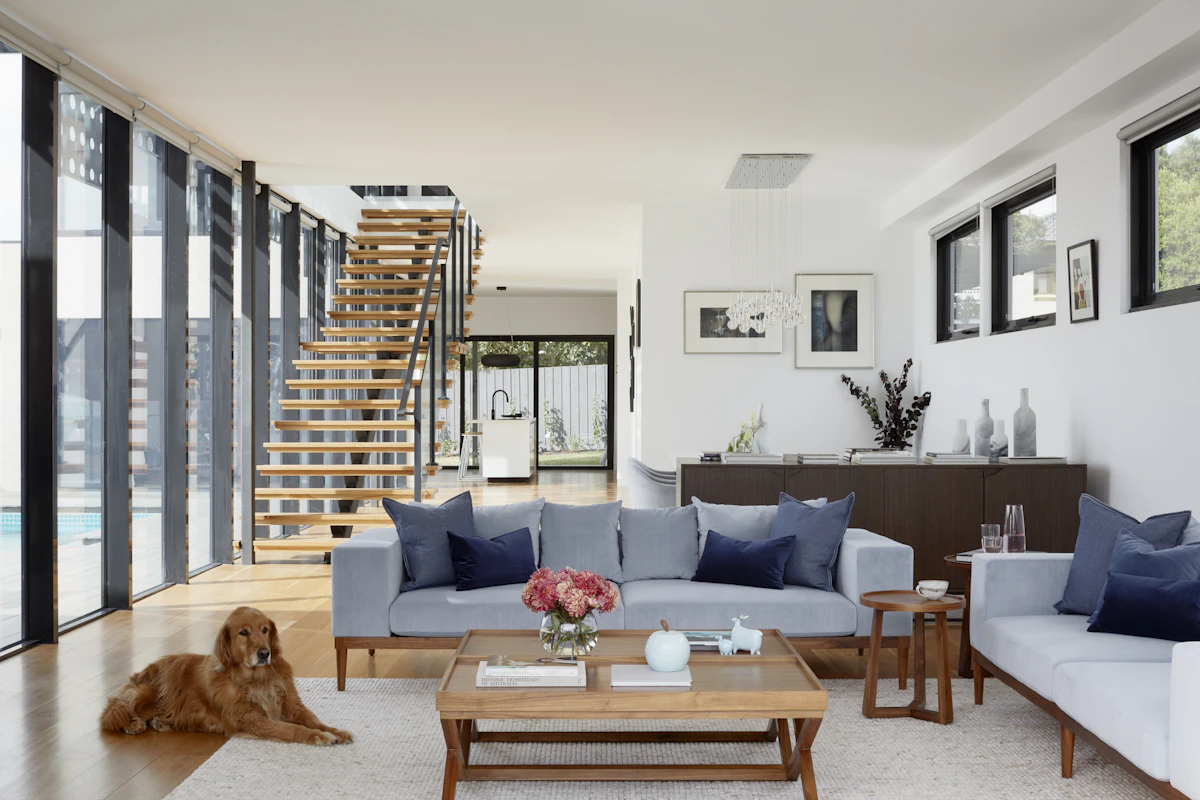

Kelvin is a feeling before it is a number
2700K reads as warm and domestic, 3000K as crisp but still comfortable, 4000K as neutral and businesslike. In the Gulf, interiors that face intense daylight often carry 3000K comfortably where a northern European interior would want 2700K.
Consistency matters more than the value
A room at a consistent 3000K looks considered. A room mixing 2700K and 4000K looks broken, and no amount of design intent rescues it. Specify binning tolerance — three-step MacAdam or better — or accept visible variation between adjacent fittings.
CRI, and the R9 problem
A 90 CRI rating averages performance across eight pastel samples and can hide very poor deep-red rendering. R9 measures saturated red specifically, and it is the value that decides whether skin, wood, food and fabric look alive. Ask for R9 separately; it is routinely omitted.
Warm dimming
Incandescent light got warmer as it dimmed, and the eye still expects that. Warm-dim LED sources falling from 2700K to 2200K are the closest available equivalent, and in dining and living spaces the difference is not subtle.